Emergency Commercial Cleaning Response for Emergency Callouts

Emergency Commercial Cleaning Response for Emergency Callouts
Professional commercial cleaning, night janitorial crews, and floor care for offices and facilities.
emergency commercial cleaning response for emergency callouts
Safety comes before cleaning. If water has reached sockets, wiring or equipment, keep people out until the electricity has been isolated by someone competent. Sewage and floodwater carry bacteria and should not be tackled with a household mop and bucket; staff should stay out of affected areas and avoid touching contaminated items. In older buildings, do not disturb damaged ceiling tiles, pipe lagging or floor tiles that might contain asbestos, because the Control of Asbestos Regulations 2012 require suspect material to be assessed before anyone works on it.
A clear enquiry helps independent cleaning companies decide what to send. Describe what happened and when, the size of the area, the floors and furnishings affected, whether water is still present, whether the source has been fixed, and whether the building is open to the public. Photographs taken without entering the affected area are useful. If your insurer is involved, tell the cleaning company, because some insurers want to agree the scope before work starts.
For sewage or floodwater, the work normally includes removing standing water and debris, disposing of items that cannot be decontaminated, such as soaked carpet, cardboard and some furnishings, cleaning and disinfecting hard surfaces, and leaving the area to dry. Mould can develop on damp materials within days, so the sooner wet items are removed the better. Drying building fabric and checking walls and floors for damp is often specialist work that follows the clean, so ask whether the company arranges drying equipment or whether a separate firm is needed.
Where blood, vomit or other bodily fluids are involved, the work needs trained operatives, suitable protective equipment and a correct route for disposing of contaminated waste, which may be classed as hazardous. Broken glass and sharp debris need to be collected safely before other cleaning starts. For food businesses, any area where food is prepared or stored must be cleaned and disinfected to a standard that meets food hygiene requirements before it is used again, and contaminated food must be thrown away.
Keep a record of everything. Photographs before, during and after, a list of items discarded, the products used and a written description of the work will be needed for an insurance claim and may be requested by an environmental health officer. If the incident affected staff, such as a sewage leak in a workplace, the business's own health and safety records should note what happened and how the area was made safe.
Urgent work is often priced differently from routine cleaning, particularly out of hours. Before agreeing a start, ask each cleaning company how the work will be charged, what the first visit covers, how waste will be disposed of, and whether a return visit is expected once the area has dried. A written scope agreed before work starts avoids disputes with the insurer later.
Before You Compare
Designed for Emergency Callouts
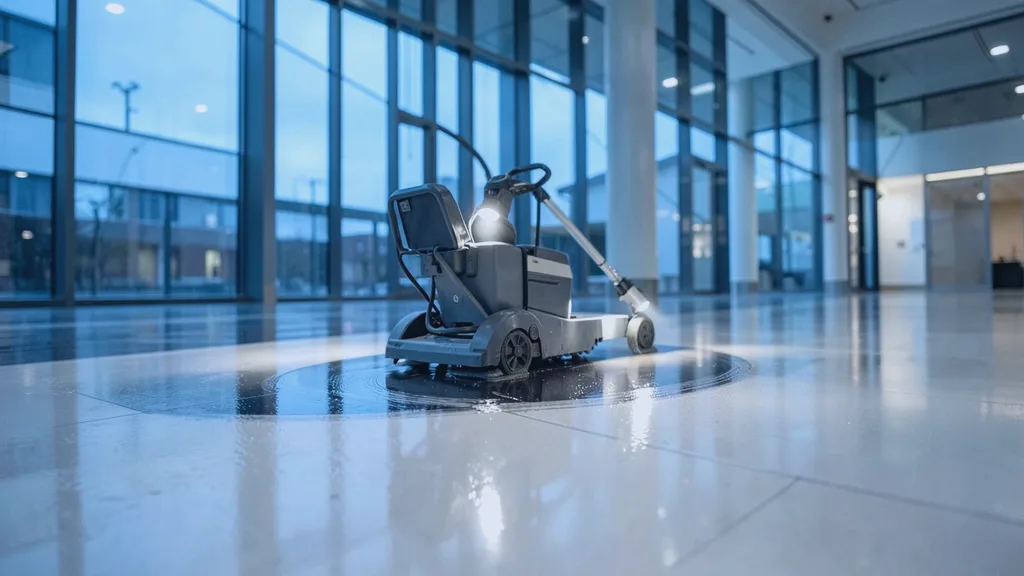
Use these illustrative category images as context when describing the work; they are not a local project portfolio.
Local coverage
See Commercial Cleaning Assessment & Consultation for Emergency Callouts
See Standard Commercial Cleaning Solutions for Emergency Callouts