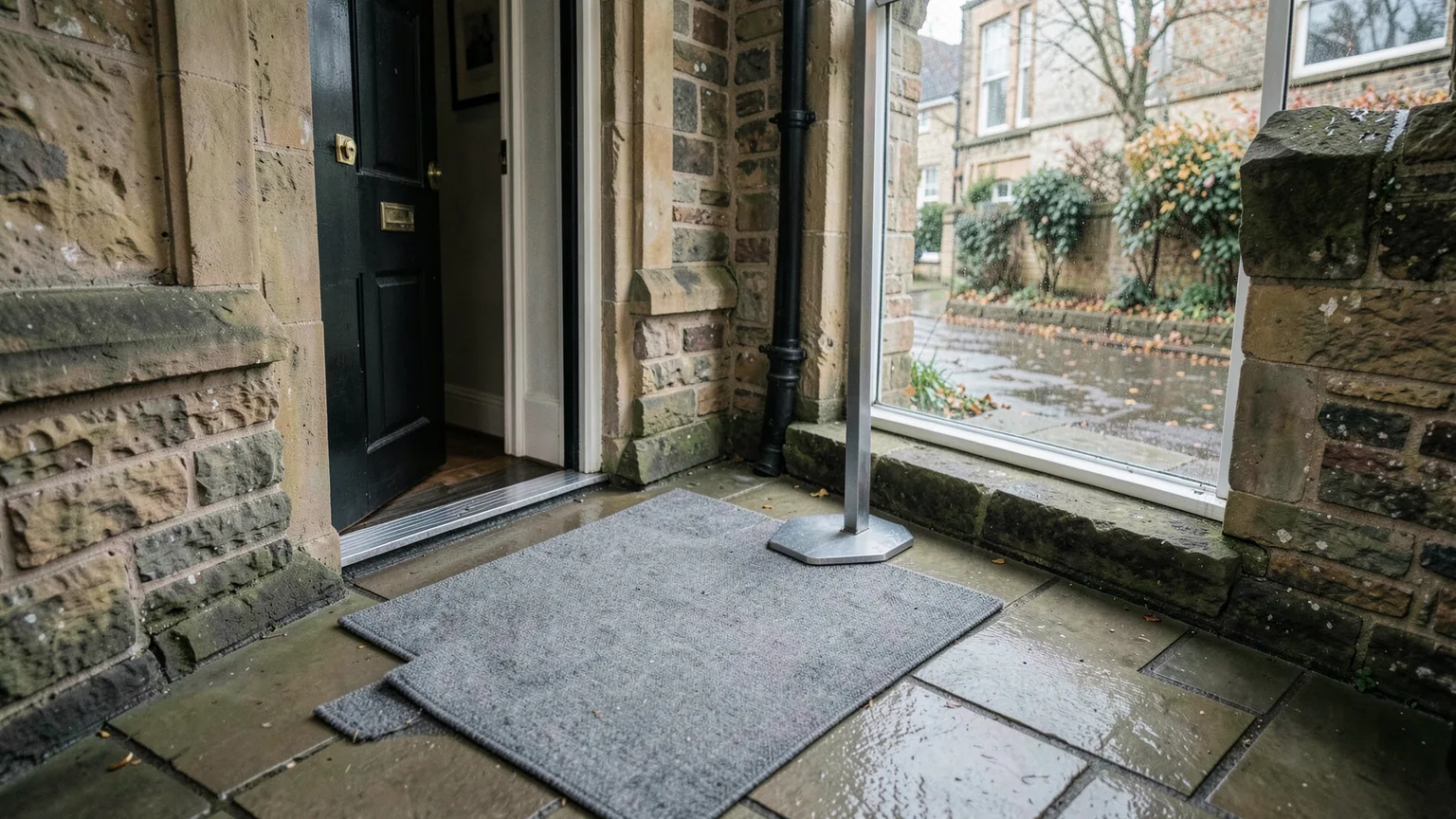
Matting and wet-weather routines for Bristol premises
Most of the slip and trip risk in a Bristol office, shop or clinic arrives through the front door. Wet shoes, grit, leaves and road salt are carried across the entrance and spread over the nearest floor, and the problem repeats on every wet day. A cleaning specification that deals with this properly treats the entrance as a planned system: matting to catch the dirt, a set routine to remove what gets through and a seasonal adjustment that increases the effort when the weather turns. This guide explains how to build that system into the specification and what to ask a contractor about it.
Entrance matting as the first line
Matting is a practical and effective way to reduce the amount of dirt that enters a building. A good entrance system usually has two zones. An outer scraper mat removes coarse grit and mud from the soles, and an inner absorbent mat takes up the water that remains. Both need to be long enough that a person takes several steps across them, and both need to lie flat so the edges do not curl up into a trip hazard.
The matting should be part of the specification rather than an afterthought. Name the number of mats, their position and the cleaning method for each, and say who is responsible for replacing worn or damaged units. A mat that is never lifted and cleaned soon becomes a source of dirt rather than a barrier to it. Many contractors offer matting on a rental basis with regular exchanges, and that arrangement can make the routine easier to maintain during the wetter months.
The HSE's slips and trips pages show where the hazard comes from, and the duty itself is stated in regulation 12 of the Workplace (Health, Safety and Welfare) Regulations 1992: every floor and traffic route must be kept free from obstructions and from any substance that may cause a person to slip, so far as is reasonably practicable. An entrance mat that is never lifted and cleaned is one of the most common ways that duty is missed in practice.
A timed wet-floor routine
Once water and dirt reach the floor, the routine has to deal with them quickly. A timed approach works best in a busy building. Set a schedule for the entrance and the main corridors, for example at the start of the working day, at midday and at the end of the day, and make the frequency higher on wet days. Each visit should include mopping or scrubber-drying, the removal of wet-floor warnings once the surface is dry and a check that the matting is in place.
Warning signs are part of the routine but should not replace it. A sign tells people a floor is wet, but a clean floor is the goal. Use signs while the surface is actually wet and remove them as soon as the floor has dried, so that the signs do not become background clutter that people stop noticing. Make sure the signs do not block the route to a fire exit or a lift.
Cleaning products also matter. Detergents that leave a residue can make a floor more slippery, while a product that is too weak may fail to lift the film of grease that tracks in from car parks and pavements. Ask the contractor which product is used on each floor type and how it is diluted. The rules for storing and using chemicals apply here as well, and the contractor should have the safety data sheets available on request.
Winter salt and wet floors
Road salt is spread on pavements and car parks in cold weather, and it is carried indoors on footwear. Salt dissolves into a film of water that can be far more slippery than the surface it sits on, and it leaves a white deposit that damages some floor finishes if it is left to dry. In winter the routine should include a focused clean of the entrance and the route from the car park, with attention to the edges of the matting where salt collects.
Clients should also consider the external areas. A contract that covers the interior but ignores the steps and the approach path can leave the entrance wet again within minutes of being cleaned. Where the premises have their own forecourt, clarify who is responsible for gritting and clearing it, and whether the cleaning contractor's scope includes it. A contractor who can work in the early morning before staff arrive is often able to clean the entrance and check the external approach at the same time.
The Health and Safety Executive's risk assessment guidance explains how to identify hazards such as wet floors, decide what controls are needed and review them. For a building with a regular winter pattern, the risk assessment can set out the expected weather triggers and the response to each. That document also helps when a contract is reviewed, because it shows what was agreed and why.
Autumn leaves and gutters
Autumn brings a different set of problems. Leaves are carried in through entrances, collect in external corners and block drains and gutters. Wet leaves on a pavement or a car park are slippery, and leaves that reach the building can block drains that then overflow. A specification that includes seasonal leaf clearance should say how often it is done, which areas it covers and whether clearance of gutters and downpipes is included.
Gutters and roof drains are often outside the normal cleaning scope and require access equipment. Where the work is included, the contractor should explain how the access is achieved and how the work will be made safe. Those points are covered in more detail in the guide on cleaning at height.
Condensation and mould prevention
The damp that follows a wet season can produce condensation on cold surfaces, particularly in washrooms, kitchens and rooms with poor ventilation. Condensation that is left to sit can encourage mould on walls and around window frames. Cleaning cannot fix a ventilation problem, but a routine can help. Ask the contractor to wipe down condensation prone surfaces during each visit, to check that extraction fans are working and to report any persistent damp to the building manager.
The rules on workplace ventilation and cleanliness are part of the wider duty on the employer to provide a safe and healthy working environment. Mould that builds up unnoticed is a sign that a building needs attention beyond cleaning, so the contract should include a reporting route for those problems rather than leaving them to the cleaning team to handle alone.
Building the routine into the contract
A seasonal routine works best when it is written down as a separate schedule. Under the HSE's managing health and safety approach, the routine should also be reviewed when the building or its use changes. The schedule should state the months in which the winter and autumn tasks apply, the frequency of each task and the trigger for increasing it, such as a forecast of rain or frost. It should name the person who decides when to increase the frequency, which is often the building manager, and it should say how the change is recorded.
When you ask for quotes, give every contractor the same entrance details, the same matting requirements and the same seasonal expectations. The result will show which contractors have thought through the problem, and which have simply offered a daily clean. The guide on cleaning offices during the day explains how the timing of visits can help when the entrance is busy.
If the wet-weather routine is part of a larger specification, you can request quotes that describe it in full, or look at the entrance and common area services available for commercial premises. A well-matted entrance and a sensible routine will do more to prevent accidents than any sign.
Sources and further reading
- The Workplace (Health, Safety and Welfare) Regulations 1992, regulation 12 (legislation.gov.uk)
- Slips and trips (HSE)
- Risk assessment (HSE)
- Managing health and safety (HSE)